


Continuity combines preserving engineering culture with developing new technologies and markets
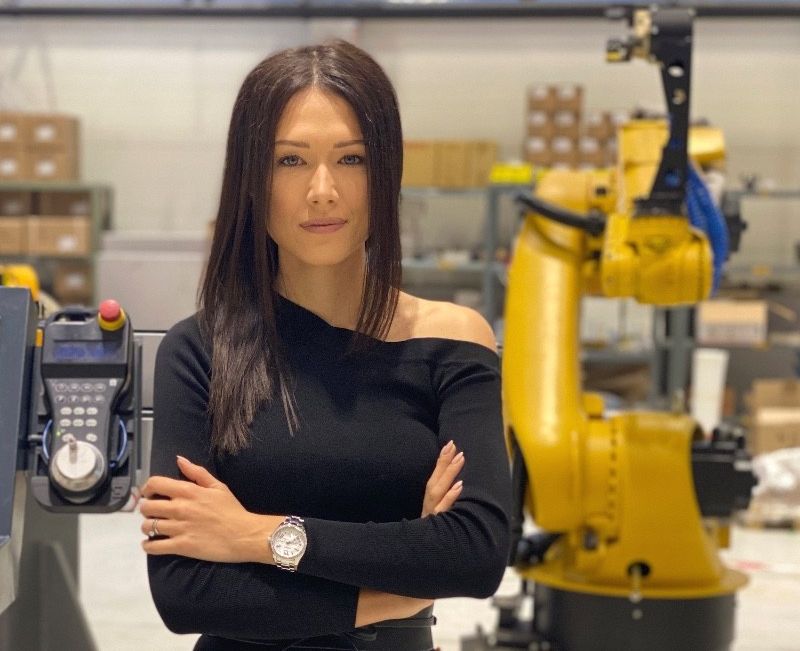
Ivana Slavkova-Boteva, Procurator and Business Development Manager at Spesima, for Robotics-Bulgaria.com
How does the idea of continuity in business look through your perspective and through that of Spesima – a company with nearly four decades of market experience?
For me, continuity has never been just a matter of family or inheriting a position. I literally grew up in Spesima.
My father founded the company in 1989. Even as a child, I spent a lot of time at the office. I remember watching him work, seeing how many people sought his opinion, and observing the way he approached everything he did. Back then I didn’t understand exactly what his work involved, but I was impressed by everything happening at Spesima.
At the age of 12, I was already consciously helping him during school breaks – organizing documents, answering the phone, and gradually starting to understand how a business operates.
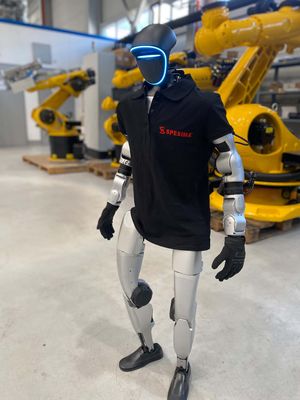
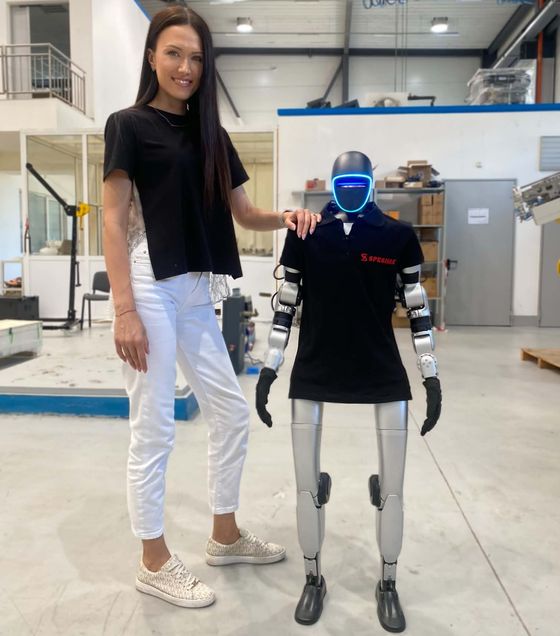
Now I see that same curiosity in the eyes of my children, who come with great enthusiasm and can’t wait to see the new robots. I’m excited to show them the humanoid robot we delivered last week.
Continuity is part of the company culture. To me, it is very telling that today we have team members who are sons of long-time colleagues who have been part of Spesima since the very beginning. This is a special form of trust and continuity that cannot be artificially created.
My professional path at Spesima began in 2017, after completing my higher education in Manchester and gaining several years of experience in an international company. Honestly, the beginning wasn’t easy. I had to find my own place in a team of proven engineers with decades of experience. I was often perceived first as “the boss’s daughter” rather than as a professional.
Over time, I realized that continuity doesn’t mean doing things the same way, but building upon what has already been achieved. Today, I see my role precisely in this – preserving the engineering culture and reputation built over almost 40 years, while simultaneously developing new markets, new technologies, and a new way of thinking.
What is needed for traditions and innovation to meet – for engineering experience and the next generations of specialists to work together? How has Spesima supported this process over the years?
In manufacturing, there is no shortcut. Many types of knowledge cannot be learned from a textbook or a video. They are passed from person to person, from generation to generation.
At Spesima, we have colleagues who have been part of the company for more than 25 years. Their accumulated practical experience is invaluable. At the same time, new generations bring a different perspective on digitalization, robotics, software, and process management. The best results come when these two worlds work together.
That is why over the years we have actively worked with students, interns, and young engineers. We give young people the opportunity to see the real application of technologies in industry. I believe that the future of manufacturing depends not only on machines, but also on our ability to pass knowledge forward.
How is the role of women changing in sectors and professions traditionally dominated by men? Do you observe a shift in attitudes and career opportunities?
I definitely see a change. When I started working at Spesima, I often had to first prove that I understood my work before someone would listen to my opinion. Sometimes this was related to my age, sometimes to the fact that I am a woman. There have been meetings where I felt skepticism even before the conversation began. There were moments when I was close to giving up.
But over time, I learned that respect is earned through consistency, competence, and results. Today, I increasingly see women in engineering, technical, and managerial roles. In my view, the most important change is that we are gradually stopping the conversation about “women in industry” as something unusual.
Automation and robotics offer an entirely new interpretation of traditional manufacturing tasks. Which technologies and trends are shaping the future development of industry?
In recent years, automation has ceased to be a topic only for large manufacturing enterprises. Today, companies across almost all industries are looking for ways to increase productivity, reduce dependence on labor shortages, and achieve higher and more consistent quality.
Several trends stand out clearly. First is the increasingly widespread adoption of robotic systems – not only for heavy and dangerous operations, but also for tasks such as assembly, processing, inspection, palletizing, and internal logistics. Machine vision systems are becoming more important, enabling robots to be more flexible and adaptive to changing production environments.
At the same time, we are seeing significant development in digitalization and data analysis. Manufacturing systems no longer operate in isolation but are connected in a unified environment that allows real-time tracking, analysis, and optimization of processes. We also increasingly see the implementation of technologies related to artificial intelligence and autonomous mobile robots.
But if I had to point out one main trend, it is the shift in how companies view automation. Today, clients rarely look for a standalone robot, machine, or specific technology. They look for a solution to a production problem.
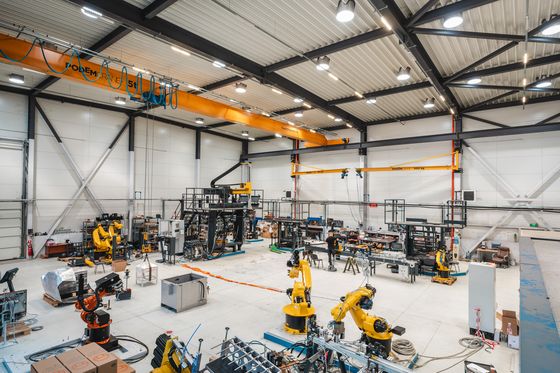
That is why I believe the future belongs to companies that can combine engineering expertise, manufacturing experience, and modern technologies into a complete solution. Companies that understand the process from start to finish and can handle everything – from analysis and design to manufacturing, integration, programming, and service support.
This is exactly the direction in which Spesima is developing. Our accumulated experience in automating complex and heavy manufacturing processes allows us today to work not only in the foundry industry, but also in mechanical engineering, metalworking, logistics, and many other sectors where clients seek a reliable partner for complete automation.